
Winter Is Coming. Is Your Fleet Ready?
Author
Richard Kemner
Date Published

Winter Is Coming. Is Your Fleet Ready?
By the RDK Truck Sales Team
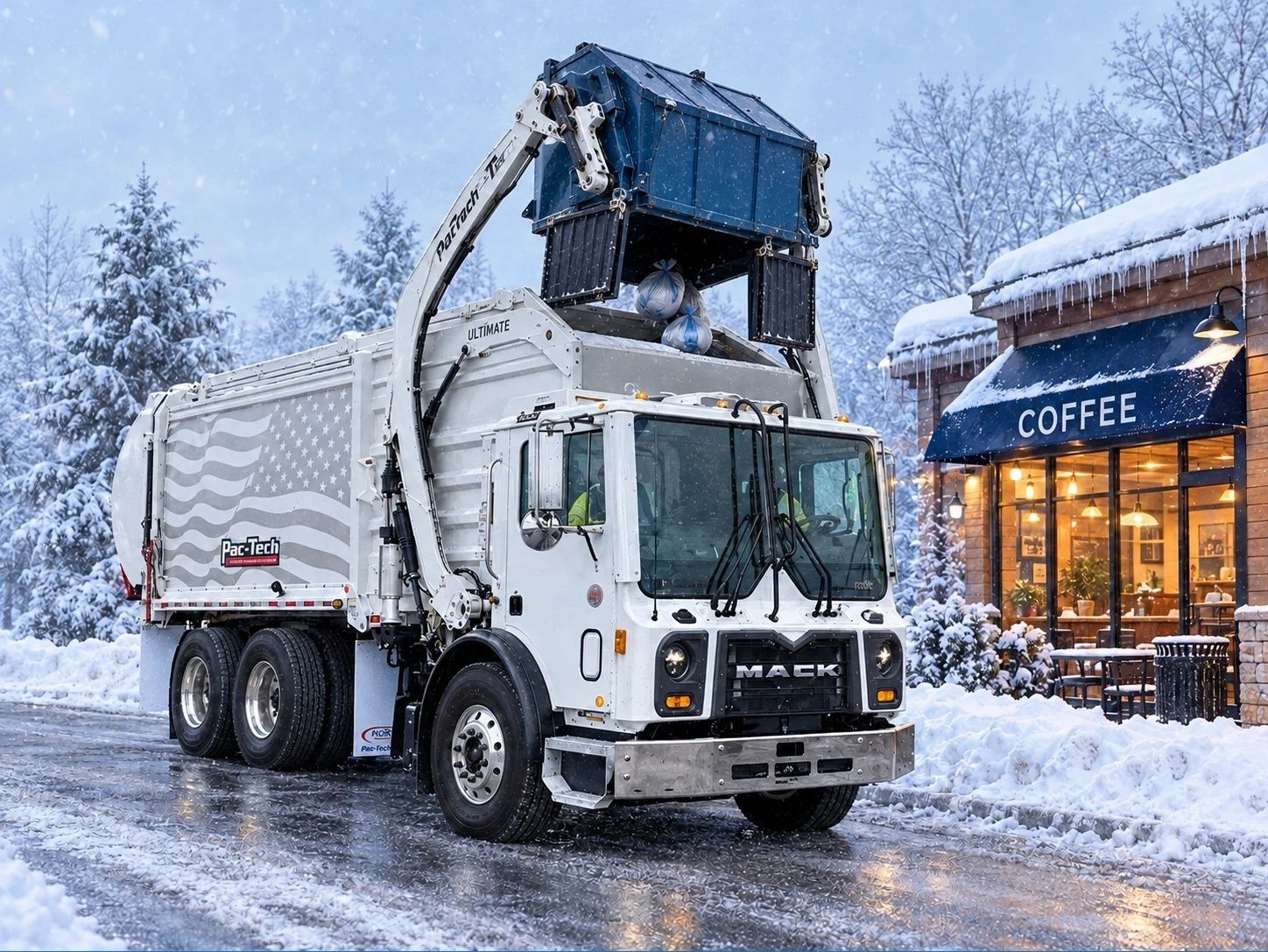
Cooler nights and the holiday season are on the way. Before the calendar fills up, your friends at RDK have a friendly reminder: put winter fleet maintenance on the schedule now, not on the cold morning when you need every truck on its route.
Think about that early pickup beside the neighborhood coffee shop. The lights are on, the first pot is brewing, and your crew is ready to work. We want your truck ready, too.
The body types below are examples, not limits. Review every truck and every fitted system, using the applicable engine, chassis and equipment manuals.
Start With the Cab, Visibility and Starting System
A good walk-through starts before the truck leaves its parking spot. Give drivers a chance to report anything that has been slow, noisy, leaking or unreliable.
- Glass, wipers and washer fluid: Clean the windshield inside and out, inspect wiper blades and operation, and fill the washer system with fluid rated for the temperatures your route may encounter (Freightliner driver guidance).
- Heat and defrost: Test the heater, blower and defroster; have a technician verify any seasonal heater-coolant valves are set correctly and inspect heater lines, clamps and connections for leaks (Government Fleet’s winter-preparation guidance).
- Batteries and starting: Load-test batteries, clean and secure terminals and grounds, check charging performance, and inspect belts and any installed block-heater equipment (Government Fleet).
Check Antifreeze, Engine Oil, Fuel Pumps and Filters
Ask your team to document what they find and verify the repair before releasing the truck.
- Antifreeze and cooling: Check coolant level with the engine cold, test freeze protection, verify the specified coolant and mixture, and inspect the radiator, water-pump area, engine hoses and fittings for seepage (Cummins maintenance guidance, Government Fleet).
- Oil and filters: Confirm the correct engine-oil approval and viscosity for expected conditions, complete due oil/filter service, and check air-filter restriction rather than assuming every truck uses the same products or intervals (Cummins).
- Fuel pumps and delivery: Include fuel pumps, lines, connections and filters in the inspection, and have a qualified technician investigate hard starting or fuel-delivery complaints using the installed engine’s procedure (Cummins fuel-system guidance).
- Diesel fuel and water separators: Drain the separator as directed, check filter service needs, and use climate-appropriate fuel and only additives permitted by the engine manufacturer (Freightliner cold-weather guidance).
Use the correct requirements for each engine and fuel system, including natural-gas engines where fitted (Cummins natural-gas maintenance guidance). Never loosen high-pressure fuel fittings while the engine is running (Cummins fuel-system safety guidance).
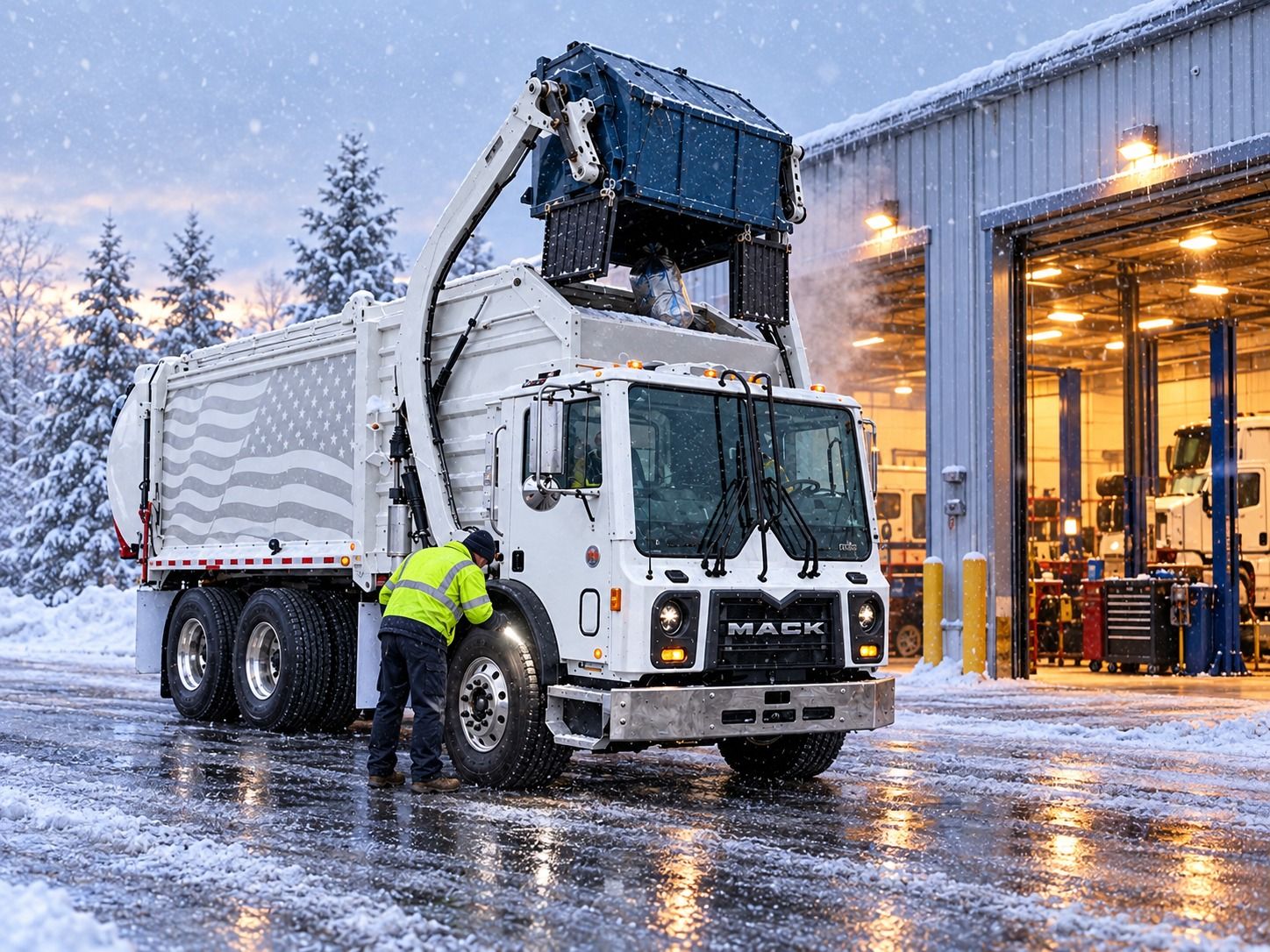
Work Back Through the Drivetrain, Brakes and Hydraulics
Keep the walk-through moving toward the rear. Don’t let a truck that starts easily get a pass on the systems that steer, stop, lift and pack.
- Transmission and rear axles: Check levels by the specified procedure, inspect for leaks, and verify the approved fluids, temperature ranges and service intervals (Allison approved fluids, DTNA axle maintenance guidance).
- Brakes and air system: Check moisture and leaks, drain reservoirs on the proper schedule, service the air dryer as required, and have qualified personnel inspect brakes, chambers, hoses, lines and air-pressure build-up (Bendix winter guidance).
- Hydraulics, pumps and PTO: Check fluid and filters, inspect hoses, cylinders and fittings, investigate pump/PTO concerns, and follow the body manufacturer’s warm-up procedure before loading the system (RDK hydraulic-maintenance guidance, PALFINGER maintenance guidance).
- Grease, tires and visibility: Follow the chassis lubrication chart, check cold tire pressures and condition, and verify lights, mirrors and applicable warning equipment (Freightliner maintenance guidance, Bendix).
Cold hydraulic oil becomes more viscous, so “thicker is better” is not a winter-maintenance rule (Parker low-temperature guidance). Use the approval and temperature range specified for each component rather than changing viscosity by habit (Cummins, Allison, DTNA).
Know What DEF Freezing Does and Does Not Mean
DEF freezes at approximately 12°F, but freezing alone is normal, and a functioning SCR system is designed to thaw it (Cummins DEF guidance). Never add antifreeze, water or anti-gel to DEF (Cummins).
Where equipped, check DEF level, heater operation, warning messages and scheduled filter service, and address faults before dispatch (Cummins maintenance guidance). Follow the engine’s instructions for aftertreatment warnings and required service rather than assuming a cold morning explains them away (Cummins).
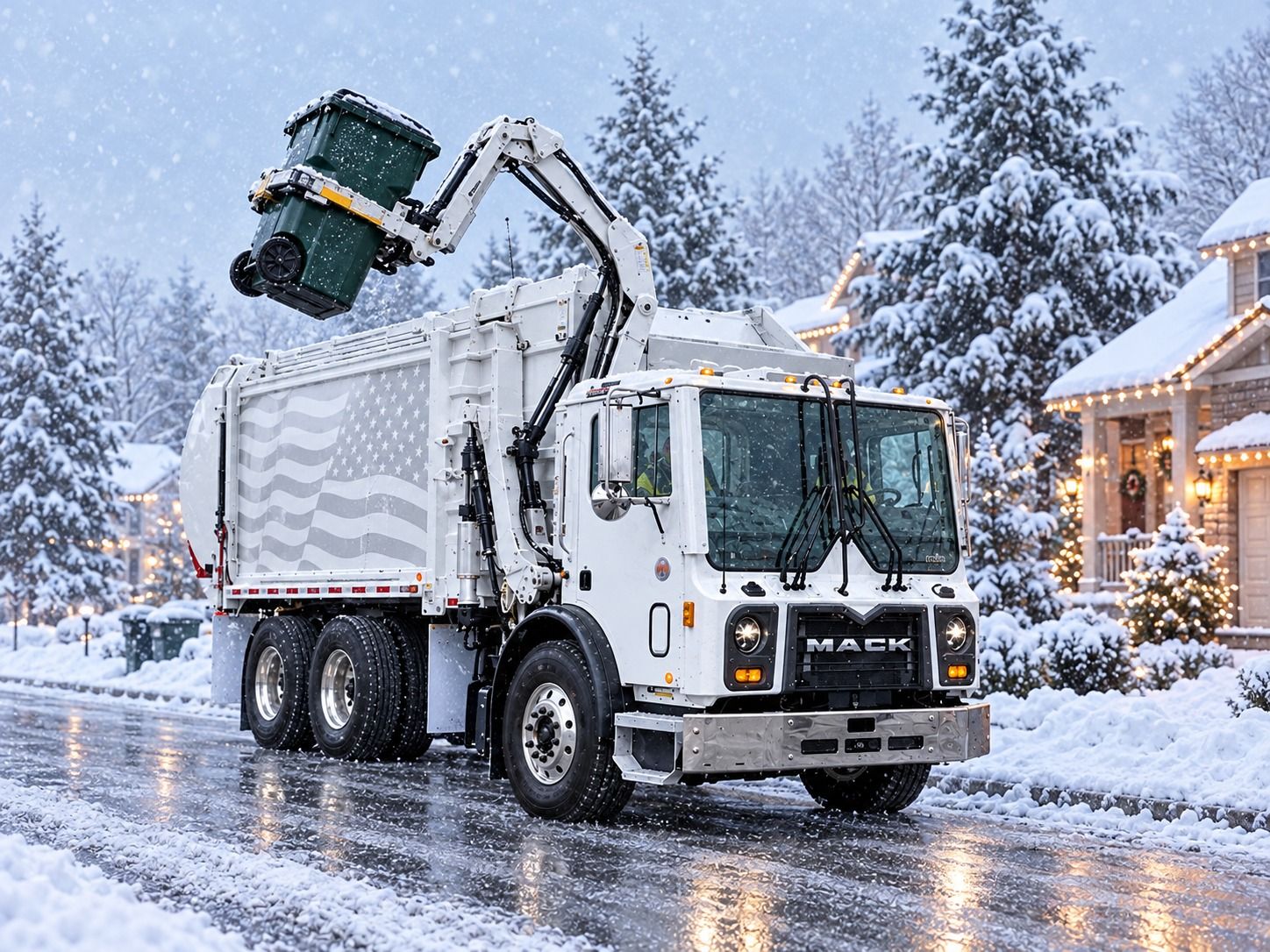
Don’t Stop at the Chassis: Inspect the Refuse Body
The engine is only part of the job. Our suggested body walk-through includes mounts, welds, pins, cylinders, hoses, controls, lubrication points and fitted safety devices, informed by Heil’s pre-trip guidance and PALFINGER’s equipment-maintenance guidance.
Use these body types as examples and adapt the inspection to the actual equipment. They are not a limit on which trucks need attention.
- Front loaders: Include lift arms, forks, cross-shafts, pivots, cylinders, hopper door, packer, tailgate and locking system in the review, using the body’s component and service references (McNeilus front-loader overview, Pac-Tech manuals and parts resources).
- ASL and side loaders: Check grabbers, pads, arm joints, moving hoses, cylinders, packer, tailgate, sensors and interlocks, then verify lift, return and stow functions by the manufacturer’s procedure (Heil side-loader overview, Heil pre-trip guidance).
- Rear loaders: Inspect hopper and packing components, tailgate hinges and locks, controls, stops, steps and handholds, plus cart tippers, winches or reeving equipment where fitted (Heil rear-loader overview, Heil pre-trip guidance).
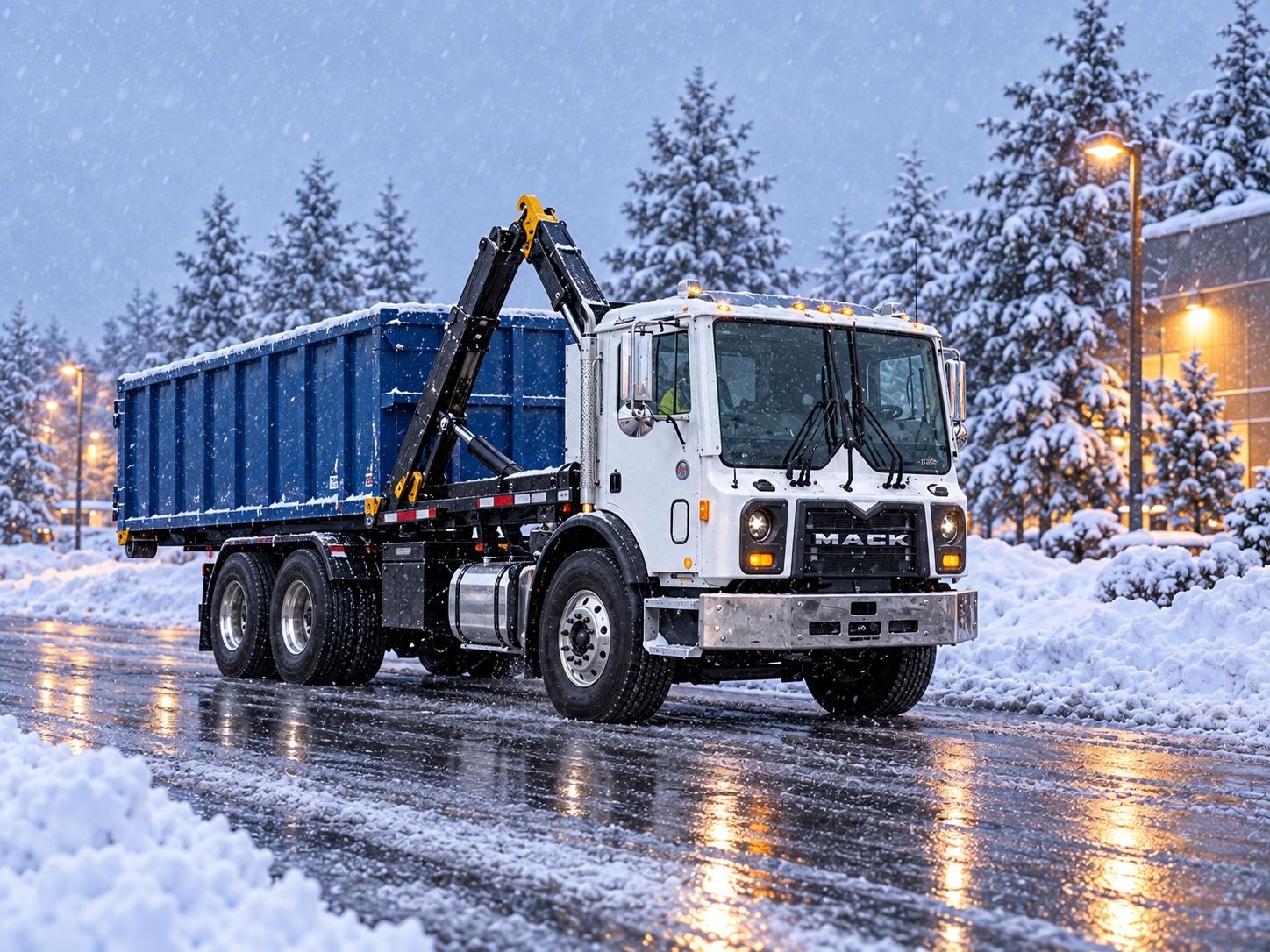
- Roll-offs and hooklifts: Review the hoist, subframe, cable or hook system, sheaves, rollers, cylinders, hoses, container securement and tarp equipment as applicable (Municipal Equipment roll-off service guidance).
- Grapple trucks: Include the boom, pedestal, grapple, rotator, pins, hoses, stabilizers, swing system, controls and transport locks, plus any fitted dump body and hoist (PALFINGER grapple-loader guidance, OSHA raised-body precautions).
Make the Checklist Count
We recommend recording the unit number, coolant freeze-test result, defects found, assigned repairs and the person who releases the truck.
Use proper lockout/tagout and approved mechanical supports when servicing raised bodies, tailgates or arms; never rely on hydraulics alone (OSHA service precautions). Keep safeguards in place and people outside pinch/crush zones during authorized testing (NIOSH refuse-truck safety recommendations).
Take the checklist to the shop
Take this reminder into the shop. Use the chassis checklist first, then complete the sections that match your refuse body and other fitted equipment.
RDK Gives You More Choice
Getting ready for winter may mean servicing the trucks you have, planning a replacement or exploring another truck for your routes. Your friends at RDK are here to help you consider the options.
- New trucks: Talk with our sales team about your next fleet addition and the equipment your operation needs.
- Used trucks: Explore pre-owned options that fit your application and budget.
- Rental trucks: Ask about rental options when you need additional coverage, with leasing options available to discuss as well.
- Parts: Bring your parts questions to an RDK parts expert.
- Service: Connect with a friendly service consultant about maintenance, repairs and getting your trucks ready for the season.
This article is a general maintenance reminder, not a complete inspection or model-specific service procedure. Follow the applicable manuals, approved products, service intervals and safety requirements for every truck and fitted system.
RDK gives you more choice. New trucks, used trucks, rental trucks, and don’t forget the parts and service.
Let’s talk about what your fleet needs before the holiday rush. Visit RDK Truck Sales or call our team.
Call (813) 241-0711
After 40 years in refuse, RDK's Richard Kemner shares real cold-weather hydraulic maintenance tips to keep your fleet running all winter.

DEF freezes at 12°F and hydraulic fluid thickens fast. See how extreme cold hits refuse trucks and get a pre-trip checklist to avoid breakdowns.

DEF is 32.5% urea and 67.5% deionized water. Heat and time are what push it off spec, and off-spec fluid is what kills sensors, catalysts, and uptime.