
Why You Should Never Leave Trash on a Garbage Truck Overnight
Author
Richard Kemner
Date Published

RDK Truck Sales · Fleet Maintenance
Why You Should Never Leave Trash on a Garbage Truck Overnight
A shortcut that sounds harmless quietly costs you thousands — in corrosion, downtime, environmental fines, and trucks that wear out years early. Here's why end-of-day dumping should be a non-negotiable policy.

If you've been in the refuse business long enough, you've seen it happen. A driver pulls in late, the landfill is closed, or the route just ran long. Whatever the reason, the decision gets made to leave the load on the truck overnight. "We'll dump it first thing in the morning."
Leaving trash in a refuse truck overnight is one of those shortcuts that quietly costs you thousands of dollars in maintenance, downtime, and premature truck replacement every year. Here's why every fleet should make end-of-day dumping a non-negotiable policy.
What the shortcut really costs
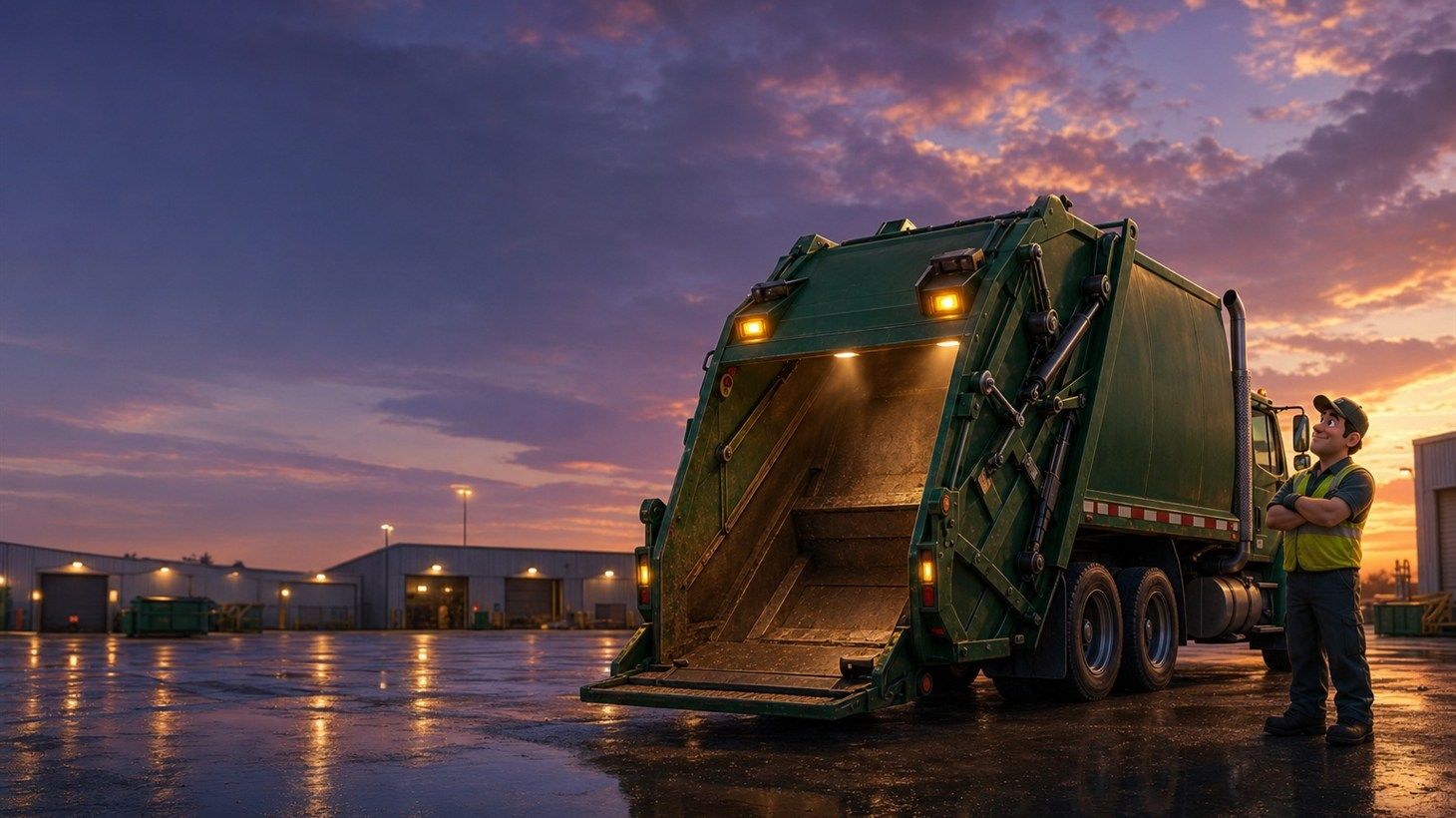
1. Accelerated Rust and Corrosion
Decomposing waste produces acidic leachate — that foul liquid that pools at the bottom of the truck body. When it sits overnight, it goes to work on your steel. Body welds and floor panels bear the brunt of the damage. Over time, this eats through the body from the inside out, shortening the life of a truck that should last you 8 to 10 years.
This isn't a slow problem either. In humid climates like we deal with here in Florida, corrosion accelerates fast. One night might not kill you, but make it a habit, and you'll be patching floors and replacing bodies years ahead of schedule.
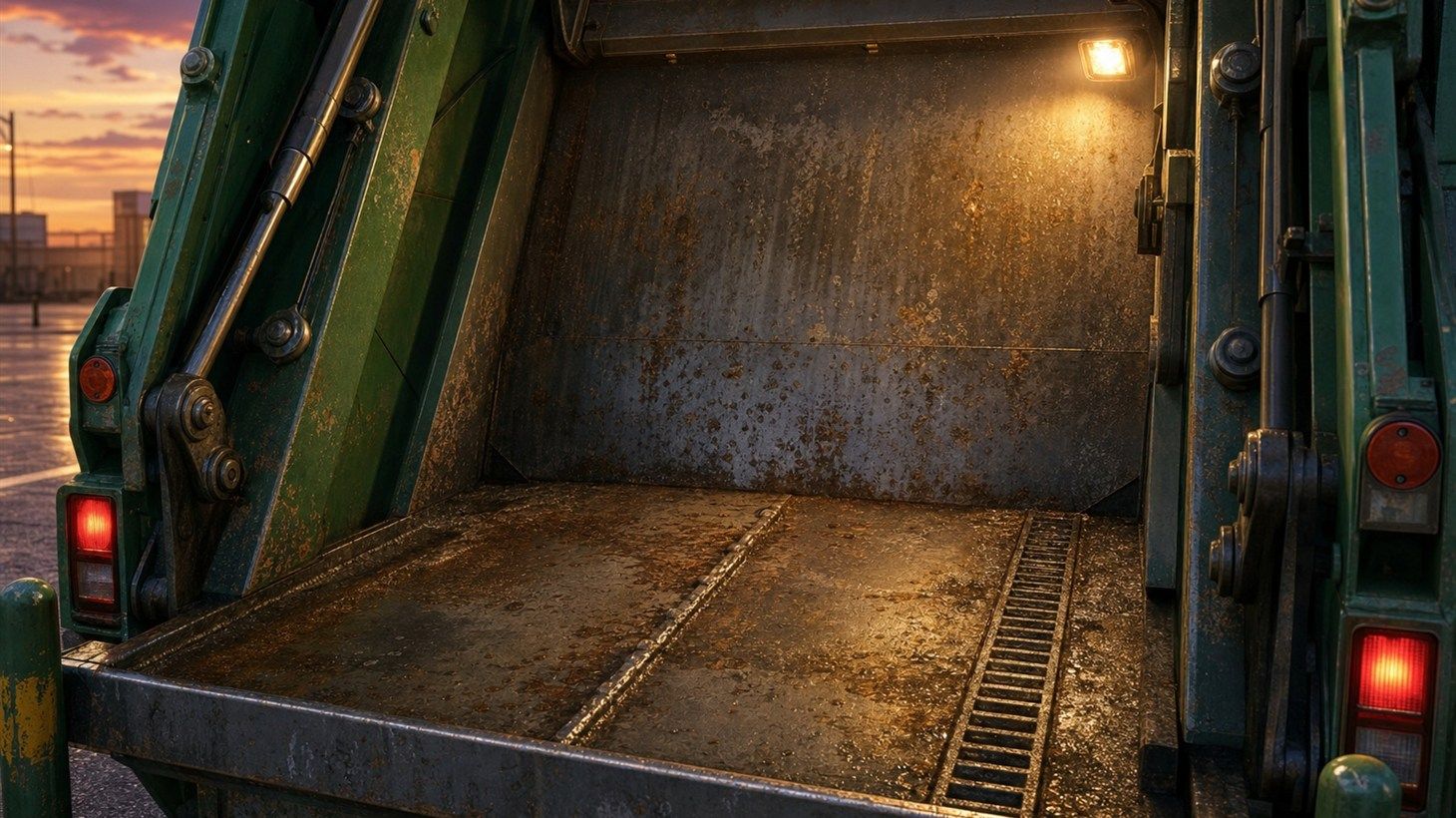
2. Leachate Damage and Environmental Liability
That same leachate doesn't just corrode metal. It can also leak. Worn tailgate seals, cracked clean-out doors, and deteriorating body panels all become exit points. Once that liquid hits the ground, you've got an environmental issue. In many states, it's illegal for a refuse truck to leak any liquid onto public roads. Fines add up fast, and the PR hit with a municipality can cost you a contract.
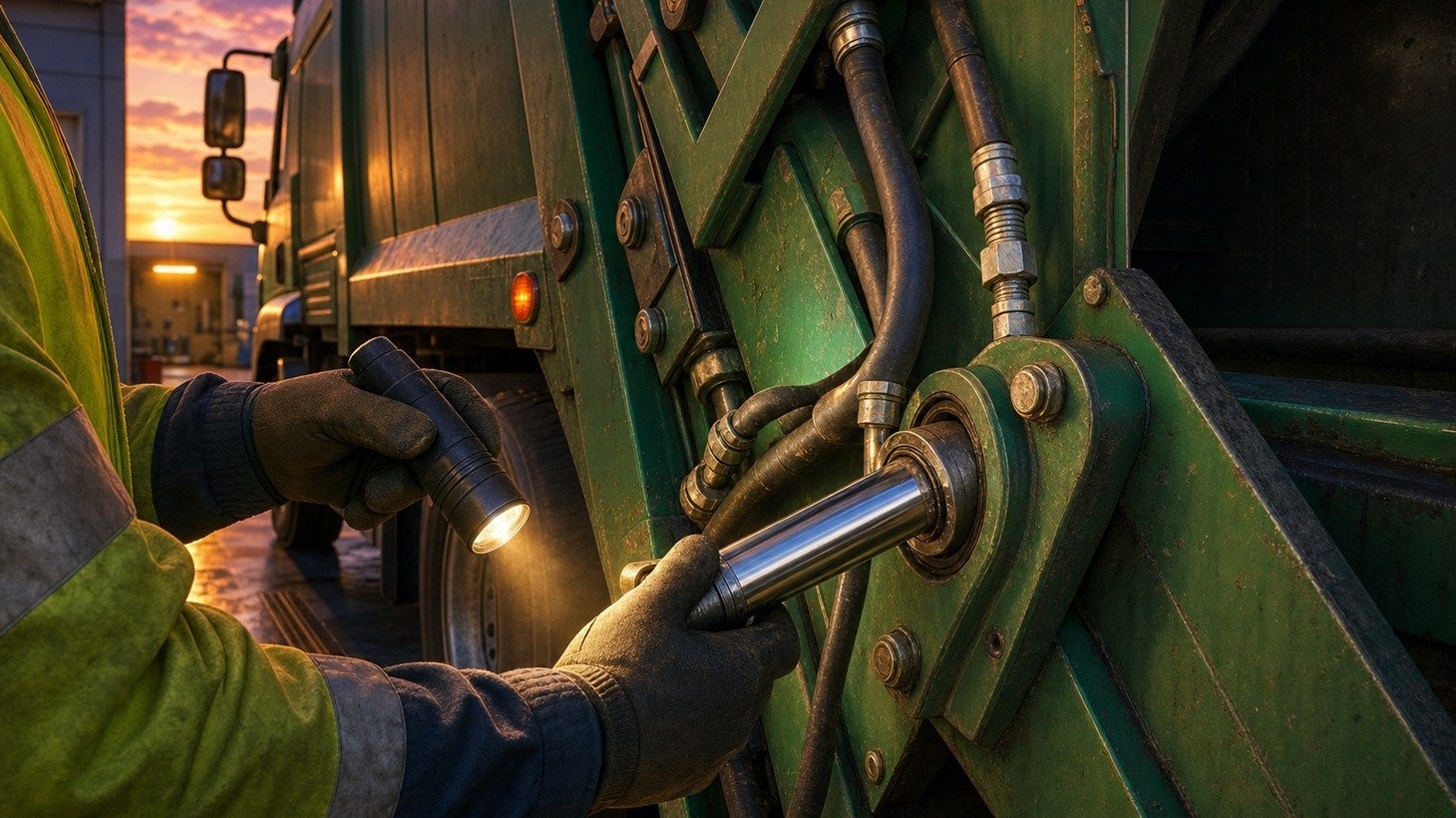
3. Hydraulic System Contamination
Decomposing food waste and sticky residue easily find their way into tight clearances. Exposed hydraulic fittings and cylinder seals take a beating, leading to fluid contamination and early leaks. A hydraulic repair on a refuse truck isn't cheap. You're looking at significant downtime and parts costs every time a seal blows or a cylinder needs rebuilding.
If the packer blade is left in a compressed position overnight, you're also putting constant pressure on the hydraulic seals. Over time, that leads to premature wear and failure.
4. Pest Infestation
Rodents and insects love a loaded garbage truck. Leaving a truck full overnight is basically rolling out the welcome mat. Pests nest in crevices, chew through wiring harnesses, and leave behind damage that's expensive to track down and repair.
Once you've got a pest problem in your yard, it spreads to other trucks and equipment. It's a headache no shop manager wants to deal with, and it's 100% preventable.
5. Odor Buildup and Driver Morale
Nobody wants to climb into a cab after it has been baking next to a load of decomposing trash all night. In the summer months, especially down here in the Southeast, temperatures inside the body can spike, accelerating decomposition and creating a smell that lingers for days — even after the load is dumped.
Drivers who consistently deal with foul conditions burn out faster. Retention is already a challenge in the refuse industry. Don't make it harder on yourself by letting trucks sit loaded.
6. Unnecessary Weight on the Chassis
A loaded refuse truck can weigh 60,000 pounds or more. Leaving that weight sitting on the chassis and tires overnight (especially on uneven ground) places continuous tension on leaf springs and air bags while twisting frame rails. It's not going to snap an axle in one night, but cumulative stress leads to fatigue cracks, sagging suspensions, and alignment issues over time.
Your trucks already take a beating on their daily routes. Give the chassis a break at the end of the day.

7. Increased Fire Risk
Decomposing organic waste generates heat. Mix in the right combination of materials — everyday hazards like lithium batteries, aerosol cans, or volatile household chemicals — and you've got a fire hazard sitting in your yard. Refuse truck fires are more common than people think, and a truck fire doesn't just destroy one unit. If trucks are parked close together, it can spread.
8. Lubricant and Grease Degradation
Critical wear points across the body—from packer arms to tailgate hinges—rely on grease and lubricant to function properly. When sticky, acidic waste sits on these components overnight, it breaks down the lubricant and clogs grease fittings. That means more friction, more wear, and more frequent maintenance intervals.
Keeping the body clean and empty at night gives your lube points a chance to do their job.
9. Compliance and Municipal Regulations
Many municipalities have ordinances restricting where loaded waste vehicles can be stored overnight. Zoning laws, environmental regulations, and contract terms often require that trucks be emptied at the end of each shift. Violating these rules can result in fines, contract penalties, or even the loss of a hauling contract.
If you're running government routes, this is especially critical. One compliance violation can put your entire relationship with that municipality at risk.
10. Shortened Body and Equipment Life
Every issue on this list feeds into the same outcome — a shorter life for your truck body and equipment. A refuse body that should give you a decade of service might only last six or seven years if it's regularly exposed to overnight waste. That's tens of thousands of dollars in lost value per truck, multiplied across your fleet.
When you're making decisions about spec'ing new trucks or planning replacement cycles, the condition of your existing bodies is everything. Take care of them.
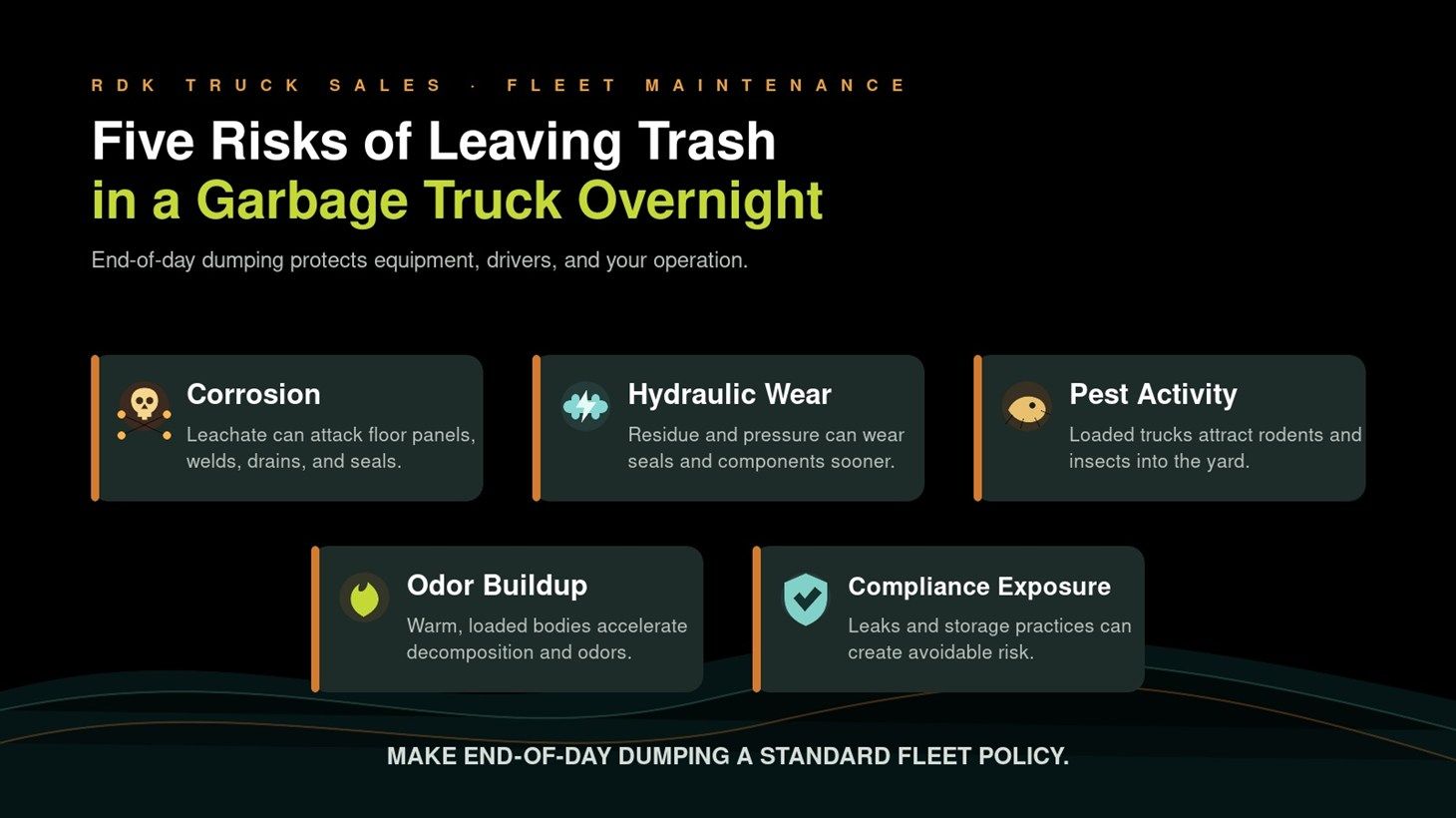
The bottom line
End-of-day dumping should be standard operating procedure for every refuse fleet — no exceptions.
The cost of running a truck back to the landfill or transfer station at the end of a shift is nothing compared to premature body failure, hydraulic repairs, pest control, environmental fines, and lost driver retention. This is one of those areas where discipline pays for itself ten times over. If your drivers are routinely coming back loaded, the problem isn't the route — it's the policy. Fix it now, before it fixes your budget for you.
RDK Truck Sales specializes in refuse trucks and heavy-duty commercial vehicles. If you're looking for quality used refuse equipment or need straight talk on fleet maintenance, give us a call — we've been in this business long enough to know what works, and what costs you money.
Richard KemnerRDK Truck Sales · Tampa, Florida
Call (813) 241-0711
Avoid the 5 costly roll-off truck maintenance mistakes that wreck hydraulics, cables, and PTOs. Get RDK's 40+ years of fleet maintenance tips.

Spring hydraulic system maintenance checklist for refuse trucks — fluid, hoses, cylinders & filters. 40+ years of expertise from RDK Truck Sales.

One misfuelling mistake can destroy a $15,000 system. See the DEF filling, storage, and DPF maintenance procedures that protect from costly repairs.