
DPF and DEF System Maintenance Guide
Author
Richard Kemner
Date Published

DPF and DEF System Maintenance Guide
This DPF and DEF system maintenance guide covers best practices, common mistakes, and how to avoid costly repairs.

The 5 Most Costly Mistakes
- Putting diesel fuel in the DEF tank → Triggers a $8,000 – $15,000 complete system replacement
- Using non-dedicated funnels or containers → Causes permanent catalyst poisoning ($3,000 – $5,000)
- Using old, heat-damaged, or diluted DEF → Leads to injector failure and crystalline deposits ($1,500 – $3,000)
- Interrupting DPF regeneration cycles → Causes severe soot buildup, forced regens, or DPF damage ($2,000 – $8,000)
- Ignoring warning lights and fault codes → Turns minor, low-cost fixes into complete system breakdowns.
Quick Reference: Do’s and Don’ts
| DO THIS | NEVER DO THIS |
| Use only API-certified DEF | Put any other fluid in DEF tank |
| Use dedicated blue DEF equipment only | Use funnels/containers that held other fluids |
| Store DEF in cool location (50-77°F ideal) | Store DEF in direct sunlight or above 86°F |
| Clean filler area before opening DEF cap | Leave DEF cap off or fill in dusty conditions |
| Allow DPF regeneration to complete | Shut off engine during active regeneration |
| Use CK-4 or FA-4 low-ash engine oil | Use high-ash oil (accelerates DPF clogging) |
| Address warning lights immediately | Ignore fault codes or “wait and see” |
Section 1: How to Fill a DEF Tank Properly
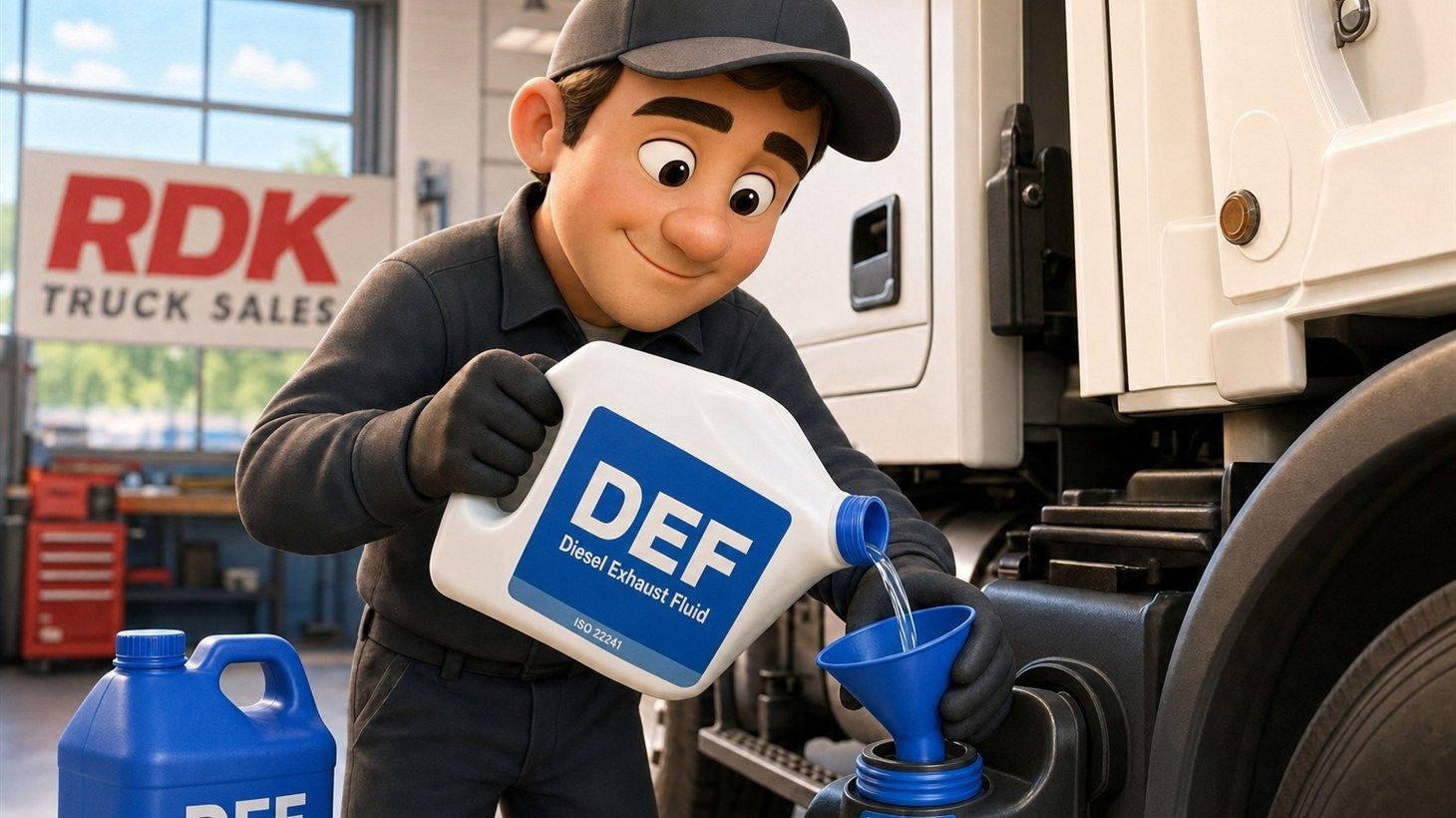
Contamination is the single biggest threat when refueling diesel exhaust fluid, where even microscopic impurities can trigger catastrophic system failures. Following a clean, standardized filling routine is your fleet’s first line of defense against costly repairs.
- Cross-contamination: Using equipment that touched fuel or oil introduces contaminants that poison the SCR catalyst permanently
- Dirt and debris: Particles enter through dirty fill areas, clogging the DEF filter and pump
- Misfueling: Even a microscopic amount of oil or fuel destroys SCR catalyst coatings
Required: Clean Filling Procedure
- Clean the area around the DEF cap with a lint-free cloth before opening
- Use only dedicated DEF equipment (blue funnels, containers, nozzles) – never equipment that held other fluids
- Verify DEF is API-certified and check the date – don’t use expired product
- Fill slowly to prevent splashing – do not overfill
- Replace cap immediately after filling – never leave it open
- Clean up any spills with water immediately (DEF crystallizes on surfaces)
Equipment Requirements
When handling DEF, container material and strict dedicated use are critical to preserving fluid purity. Storage containers and dispensing equipment must be made exclusively of HDPE plastic or stainless steel. Dispensing funnels should be color-coded blue and reserved solely for DEF.
To avoid introducing airborne contaminants or moisture, always keep filling equipment covered and thoroughly cleaned between uses. Under no circumstances should DEF come into contact with incompatible materials, including copper, brass, zinc, galvanized metal, aluminum, or carbon steel. Even trace contact with these metals rapidly contaminates the fluid and causes irreversible catalyst damage.
Section 2: How to Store DEF Properly to Reduce Degradation
Unlike standard diesel fuel, Diesel Exhaust Fluid is highly sensitive to climate conditions and chemical exposure. Understanding proper storage limits and fluid specifications ensures your DEF stays within API purity standards from the drum to the tank.
- Heat degradation: DEF stored above 86°F breaks down, forms crystalline deposits in the injector and catalyst
- Wrong concentration: DIY mixing or water dilution causes improper NOx conversion, triggering fault codes and derating
- Metal contamination: Trace metals from improper containers permanently poison the catalyst
DEF Specification Requirements
Only use DEF that is API-certified and meets ISO 22241 standards:
| Parameter | Requirement |
| Urea Concentration | 32.5% ± 0.7% (CRITICAL) |
| Water Quality | Deionized/demineralized only |
| Metals (Ca, Fe, Cu, Zn) | < 0.5 ppm total |
| Phosphates | < 0.5 ppm (trace amounts kill catalyst) |
Storage Temperature Impact
| Temperature | Shelf Life | Action |
| 50-77°F (10-25°C) | 24+ months | IDEAL |
| 77-86°F (25-30°C) | ~12 months | Acceptable |
| 86-95°F (30-35°C) | ~6 months | Use quickly |
| Above 95°F (35°C) | Rapid breakdown | DO NOT USE |
Storage Best Practices
- Store indoors in a cool, dry, well-ventilated area away from direct sunlight
- Keep containers sealed – ammonia evaporates from exposed DEF
- Practice FIFO (First In, First Out) – mark containers with purchase dates
- Never mix DEF from different suppliers or batches
Section 3: How to Maintain Your DPF System Properly
Your Diesel Particulate Filter relies on periodic high-temperature burn-offs to clear out trapped soot and maintain exhaust flow. Managing these regeneration cycles and using the correct low-ash engine oils keeps your filter operating at peak efficiency without unnecessary downtime.
- Interrupted regeneration: Shutting off the engine during active regen prevents soot burnoff, leading to excessive loading and forced parked regen
- Excessive idling: Low exhaust temps produce soot but can’t burn it off – rapid DPF loading
- Wrong engine oil: High-ash oils leave incombustible deposits that regeneration cannot remove
- Ignored warning lights: Continued operation with high soot loading can cause thermal damage to the DPF substrate
Understanding Regeneration
The DPF collects soot and must periodically burn it off. There are three types of regeneration:
| Type | When It Happens | What To Do |
| Passive | Automatically during highway driving (high exhaust temps) | No action needed – happens naturally |
| Active | ECM injects extra fuel when passive isn’t enough (light may illuminate) | Keep driving until complete – don’t shut off |
| Parked/Forced | Required when DPF is severely loaded | Must perform immediately to prevent damage |

Operational Best Practices
- Allow regeneration to complete: When the DPF indicator shows active regen, maintain steady driving (if safe) until it finishes
- Schedule highway time: Vehicles with mostly short-trip, stop-and-go operation need periodic highway driving for passive regen
- Minimize idle time: Excessive idling produces soot without the heat to burn it off – use APU when stationary
- Use correct engine oil: CK-4 or FA-4 rated low-ash oils ONLY – high-ash oils clog the DPF with incombustible ash Read this article for more information.
- Fix engine problems promptly: Oil leaks, bad injectors, turbo issues dump extra soot or oil into the DPF
- Use ULSD fuel only: High-sulfur fuel damages the DPF and DOC catalyst
Warning Signs of DPF Problems
- DPF warning light or check engine light illuminated
- Reduced engine power or limp mode
- Frequent regeneration attempts
- Increased fuel consumption
- If any of these occur – address immediately to prevent costly damage
Service Intervals
| Service | Interval |
| Back pressure monitoring | Every PM / continuous |
| DPF inspection | Annually or every 100,000 miles |
| Professional ash cleaning | 150,000 – 300,000 miles (varies by duty cycle) |
Section 4: How Small Problems Become Big Repairs
Poor DEF quality and improper DPF maintenance create a cascade of failures. Understanding this chain helps explain why prevention is so important.
| Initial Problem | What Fails Next | Final Cost |
| Contaminated DEF | DEF pump → Injector → SCR catalyst → NOx sensors | $3,000 – $8,000 |
| Fuel in DEF tank | Destroys entire SCR system simultaneously | $8,000 – $15,000+ |
| Heat-degraded DEF | Crystalline deposits → Injector clog → Poor dosing → Catalyst deposits | $1,500 – $5,000 |
| Ignored regen cycles | Excessive soot → Forced regen → Thermal damage to DPF | $2,000 – $8,000 |
| Wrong engine oil | Ash buildup → Reduced DPF capacity → Premature cleaning/replacement | $500 – $3,000 |
The Bottom Line
Prevention Cost
Failure Cost
Section 5: Maintenance Checklists
Daily (Driver Responsibility)
- Check DEF level – top off using clean filling procedures
- Monitor dashboard for DPF or DEF warning lights
- Allow regeneration cycles to complete – don’t shut off during active regen
- Report any unusual exhaust smoke or odors
Weekly (Shop/Fleet Manager)
- Verify DEF inventory is properly stored (cool, sealed, in date)
- Inspect DEF filling equipment for cleanliness
- Review any logged fault codes across fleet
Each PM Service
- Check exhaust back pressure readings
- Inspect DEF tank cap and seal condition
- Inspect DEF lines and connections for crystalline deposits
- Check for DEF leaks
- Review and document any stored fault codes
- Verify correct engine oil is being used (CK-4/FA-4)
Annual
- Professional DPF inspection – evaluate cleaning need
- DEF system component inspection
- NOx sensor testing
- Audit DEF storage and handling procedures
- Driver/technician refresher training on proper procedures
Remember: The 3 Keys to System Longevity
- QUALITY DEF – API certified, properly stored, never contaminated
- CLEAN FILLING – Dedicated equipment, clean procedures, every time
- COMPLETE REGENERATION – Let the DPF do its job, don’t interrupt

RDK Truck Sales · Tampa, Florida
Additional Resources
For more information on DEF and DPF system requirements, refer to these official sources: Thank you for reading our DPF and DEF System Maintenance Guide.
- EPA Diesel Exhaust Fluid Guidelines – Official EPA guidance on DEF systems and regulations
- API Diesel Exhaust Fluid Certification Program – Find API-certified DEF products that meet ISO 22241 standards
- API Engine Oil Categories – CK-4 and FA-4 oil specifications for diesel engines
Keep Your Fleet RunningA few dollars in dedicated equipment and the right procedures prevent thousands of dollars in DEF and DPF system failures.
This DPF and DEF System Maintenance Guide is provided for educational purposes. Always consult your vehicle manufacturer’s specific recommendations.
Questions? Contact RDK Truck Sales – Your Trusted Partner in Refuse Equipment Since 1997
Tampa, Florida | www.rdk.com
Need a forced DPF regeneration, system diagnostic, or advice on fleet maintenance? Contact the service team at RDK Truck Sales in Tampa, FL today.

RDK Truck Sales reports from Work Truck Week 2026 on the 2027 emissions changes and new 48V-heated DOC/DPF/SCR systems for refuse and roll-off trucks.

EPA 2027 emission standards could add $20,000–$30,000 to every new refuse truck. Here's what fleet managers should know before their next purchase.

DEF freezes at 12°F and hydraulic fluid thickens fast. See how extreme cold hits refuse trucks and get a pre-trip checklist to avoid breakdowns.